


Preguntas respondidas, apoyo a las familias
Sabemos que tiene preguntas sobre el autismo, el diagnóstico y la terapia ABA. Esta página contiene las respuestas que más nos preguntan las familias, recopiladas después de años de trabajo con padres que quieren entender lo que viene después.
Children can typically begin ABA therapy at ACES in Hawaii after an onboarding process that averages approximately 3–12 weeks, depending on insurance authorization, required documentation, and scheduling availability. This is an estimated timeframe, not a guarantee, and individual circumstances may affect when services begin.
We understand that families want timely access to autism support, especially when seeking early intervention. Our intake team helps guide you through each step, from verifying insurance benefits to coordinating an initial assessment and discussing therapy availability.
The process begins when you contact ACES and provide basic information about your child. Our team reviews insurance coverage and identifies any authorization requirements. Families can securely submit intake forms and supporting documents through the Client Connect Portal. Once initial requirements are complete, a Board Certified Behavior Analyst (BCBA) conducts an assessment and helps develop a customized treatment plan. Services begin after required approvals are received and a clinical team is scheduled.
Submitting documents promptly and communicating insurance changes may help prevent unnecessary delays. Contact ACES to discuss current availability at our Hawaii ABA center and get started.
No. La terapia ABA es altamente individualizada y se adapta a las fortalezas, las metas y el estilo de aprendizaje de cada niño. Los planes de tratamiento se ajustan con el tiempo en función del progreso y de las necesidades cambiantes.
La terapia ABA en el hogar ayuda a los niños a desarrollar habilidades en el contexto de las rutinas diarias, como las comidas, la vestimenta, las transiciones, las salidas comunitarias y las actividades familiares, lo que hace que el uso de las habilidades sea más práctico y sostenible.
Los servicios de ACES at School pueden llevarse a cabo en el aula, durante las transiciones o en otros entornos escolares, según las necesidades del estudiante. El apoyo está diseñado para adaptarse de forma natural a la jornada escolar siempre que sea posible.
ABA es lo suficientemente flexible como para abordar las necesidades únicas de cada individuo. Las áreas en las que trabajan muchos clientes de ACES son:
- Comunicación: expresar necesidades, expresar lo que le gusta y lo que no le gusta, señalar, habilidades de conversación, hacer y responder preguntas.
- Habilidades sociales: tomar turnos, jugar, unirse al juego con sus compañeros, comprender las señales sociales, comprender los gestos.
- Habilidades para la vida diaria: rutinas diarias, entrenamiento para ir al baño, vestirse, cepillarse los dientes, cuidado del cabello, higiene personal.
- Habilidades comunitarias: seguridad en las calles, permanecer con los cuidadores, interactuar con otros miembros de la comunidad.
- Habilidades conductuales: conductas de reemplazo para disminuir o eliminar las conductas desadaptativas, como las rabietas, los golpes, la fuga y las autolesiones.
The autism diagnosis process may take several weeks to a few months. It often involves multiple appointments, interviews, observations, and testing sessions before results are finalized.
School-aged children may struggle with social rules, group work, transitions, and flexible thinking. Some show strong skills in specific areas alongside challenges with organization or social interaction.
No. Quality ABA therapy does not aim to erase a child’s personality, interests, or identity. At ACES, we focus on building skills that increase independence, communication, safety, and self-advocacy—while honoring each child for who they are. Differences are respected and celebrated.
Your child's initial experience at an ACES ABA center in California generally begins with an assessment conducted by a Board Certified Behavior Analyst (BCBA). This assessment provides valuable information that helps guide the development of an individualized ABA treatment plan.
During the assessment, the BCBA may observe your child engaging in play or other familiar activities while discussing their strengths, communication preferences, daily routines, and interests with you. Family priorities are an essential part of this conversation. Your child is not expected to demonstrate specific abilities during this first experience. Instead, our goal is to create a comfortable, welcoming setting where the clinical team can begin getting to know your child.
Once ongoing ABA therapy begins, sessions are organized around the goals identified in your child's customized treatment plan. Activities may include interactive play, communication exercises, movement, opportunities to practice daily living skills, and breaks when needed. The structure of each session may look different depending on whether services take place at an ACES center, in the home, or through an appropriate virtual setting.
Family involvement is an important part of our approach. ACES encourages consistent communication between caregivers and the clinical team to support each child's progress. Our compassionate California team focuses on building meaningful relationships, celebrating individual achievements, and helping children work toward their goals at a pace that supports their needs. From the initial assessment through graduation, ACES is committed to supporting families throughout their ABA therapy journey.
Your child's first experience with an ACES ABA center in Texas is about building a connection and learning what makes them unique. Before regularly scheduled ABA sessions begin, the initial clinical appointment is typically an assessment with a Board Certified Behavior Analyst (BCBA), following completion of required intake and authorization steps.
During the assessment, the BCBA may observe your child during play or everyday activities and speak with you about their strengths, interests, communication preferences, routines, and goals. There is no expectation that your child will demonstrate a particular skill on day one. Our getting started with ABA guide explains how this information is used to create a customized treatment plan that reflects your family's priorities.
When ongoing ABA therapy begins, a session might include child-led play, one-on-one skill building, movement or sensory-friendly breaks, and practice with daily routines. Depending on your child's plan and service setting, activities may also offer opportunities to engage with peers.
Whether your child receives autism support and ABA services in one of our ABA centers or in your home, our compassionate team works to build trust and make learning engaging. Caregivers are valued partners, and we'll share updates and strategies to support meaningful skills beyond the first session.
vABA therapy in Arizona can support children with autism and related developmental needs who may benefit from individualized help with communication, social interactions, daily living routines, and other meaningful skills. ACES provides compassionate, evidence-based ABA services for clients with autism, using customized treatment plans that reflect each child's strengths, interests, and family goals. Our ABA therapy program provides services for children of all ages in Arizona.
Whether ABA therapy for autism is appropriate depends on the individual, not simply their age or a checklist of behaviors. During the intake and assessment process, our team learns about your child's communication preferences, everyday routines, and opportunities for building independence. A Board Certified Behavior Analyst (BCBA) recommends goals and service settings based on that information and your family's priorities.
Coverage is a separate consideration. Most insurance plans require a formal autism diagnosis to authorize ABA therapy, and plan-specific documentation, medical-necessity criteria, or prior approvals may apply. Our Insurance & Funding page explains how ACES helps families verify benefits before services begin. Availability can also vary among Arizona centers.
If you're considering support for a younger child, you can learn more about our early intervention approach, which incorporates engaging, play-based learning. Not sure whether ACES is the right fit? Reach out with your child's age, location, and goals. Our team can help you understand the next steps and available services.
The first appointment at an ACES ABA center in Oklahoma typically involves an individualized assessment with a Board Certified Behavior Analyst (BCBA), rather than a regular ABA therapy session. After the required intake steps, this initial visit offers an opportunity to build trust and help our team learn about your child's personality, interests, and strengths.
During this assessment, the BCBA may observe your child during play or familiar activities and ask you about communication, daily routines, preferences, and family priorities. There's no expectation that your child will demonstrate a particular skill right away. We want to understand what matters to your child and how compassionate, individualized support can fit into your family's life.
Our getting started with ABA guide explains how the assessment informs a customized treatment plan, including goals, recommended therapy hours, and care settings. Once regular ABA therapy begins, sessions may include child-led play, one-on-one skill building, movement breaks, communication practice, and everyday routines.
The experience may differ between ABA therapy settings such as at-home, in a center, or online. Throughout care, trained behavior technicians work under BCBA supervision, and caregivers remain valued partners. We believe meaningful progress starts with listening, connection, and goals that reflect each client's needs.
A child's first experience at an ACES ABA center in North Carolina typically begins with an assessment conducted by a Board Certified Behavior Analyst (BCBA), which helps establish an individualized treatment plan based on their needs and strengths.
During the assessment, the BCBA may observe your child during play, familiar routines, or other age-appropriate activities. The clinician will also speak with you about your child's communication preferences, interests, abilities, everyday experiences, and your family's priorities. Children are not expected to demonstrate specific skills right away. Instead, the focus is on creating a comfortable environment where the clinical team can begin building trust and learning what makes your child unique.
When regular ABA therapy sessions begin, activities are selected according to your child's customized treatment plan. Sessions may incorporate interactive play, movement, communication practice, daily routines, and opportunities for rest or breaks. The structure of therapy can vary based on your child's developmental goals and whether services take place in a center, at home, or virtually.
At ACES, caregiver involvement and open communication are important parts of the treatment process. Our compassionate team works to establish positive relationships with each client while helping them develop skills at a pace that reflects their individual needs and interests. From the initial assessment through graduation, we're committed to supporting North Carolina families and celebrating meaningful progress along the way.
A child's first experience at an ACES ABA center in Washington typically begins with an assessment conducted by a Board Certified Behavior Analyst (BCBA), who uses the information gathered to help develop a customized treatment plan.
During the assessment, the BCBA may observe your child participating in play or familiar activities while discussing their communication, daily routines, interests, and strengths with you. Family priorities are an important part of this conversation. Your child isn't expected to demonstrate particular abilities right away. The focus is on creating a welcoming environment and learning how to provide meaningful, individualized support.
Once regular ABA therapy sessions begin, activities reflect your child's developmental goals and may include interactive play, movement, communication practice, breaks, and everyday routines. Session structure can differ depending on whether therapy takes place in a center, at home, or online.
Throughout your child's ABA journey, ACES emphasizes caregiver collaboration and open communication. Our compassionate Washington team works to build trusting relationships with clients and families while supporting progress at each child's individual pace. From the first assessment through graduation, we're here to help celebrate meaningful milestones.
A child's first experience at an ACES ABA center in Colorado typically begins with an assessment conducted by a Board Certified Behavior Analyst (BCBA), who uses the information gathered to develop a customized treatment plan.
During the assessment, the BCBA may observe your child during play or familiar activities while discussing their communication preferences, routines, strengths, and interests with you. Your family's priorities also help guide the conversation. Children aren't expected to demonstrate particular skills immediately. Instead, the goal is to create a comfortable, welcoming environment and begin understanding each child's individual needs.
When regular ABA therapy begins, sessions include activities selected for your child's personalized goals. These may involve interactive play, communication practice, movement, daily routines, and breaks. The structure of therapy may differ depending on whether services take place at a center, at home, or virtually.
At ACES, caregiver collaboration and open communication are important throughout the treatment process. Our compassionate Colorado team focuses on building trusting relationships with clients and families while supporting meaningful progress at each child's pace. From the initial assessment through graduation, we're committed to celebrating important milestones together.
A child's first experience at an ACES ABA center in Hawaii typically begins with an assessment conducted by a Board Certified Behavior Analyst (BCBA), which helps develop a customized treatment plan based on their individual strengths and needs.
During the assessment, the BCBA may observe your child during play or familiar activities while discussing their communication preferences, daily routines, interests, and developmental goals with you. Family priorities are an important part of this conversation. Your child isn't expected to demonstrate specific abilities immediately. Instead, the focus is on creating a welcoming environment where our team can begin understanding their unique needs.
When regular ABA therapy sessions begin, activities reflect your child's individualized treatment plan and may include interactive play, movement, communication practice, daily routines, and breaks. Session structure can vary depending on whether services take place at a center, at home, or virtually.
Throughout your child's ABA journey, ACES emphasizes caregiver collaboration and open communication. Our compassionate Hawaii team works to build trusting relationships with clients and families while supporting meaningful progress. From the initial assessment through graduation, we're here to celebrate your child's growth and accomplishments.
La terapia ABA de calidad debe ser segura, atractiva y de apoyo. Las sesiones están diseñadas para generar confianza y fomentar la participación, no para forzar el cumplimiento. Todas las interacciones con ACES son divertidas y efectivas.
La ABA, con sede en centros, en ACES incluye la colaboración con las familias mediante el intercambio de avances, la orientación sobre estrategias y la orientación para ayudar a llevar las metas a su hogar y comunidad. Aquí, trabajarás con tu hijo para desarrollar habilidades que le permitan comprender mejor sus metas y apoyarlas, así como para crecer dentro y fuera del centro.
La terapia ABA en el hogar de ACES incluye la recopilación continua de datos y el monitoreo del progreso para ajustar las metas y las estrategias a medida que su hijo desarrolla nuevas habilidades. El progreso se comparte con las familias para fomentar la colaboración y la coherencia. Los planes de tratamiento de su hijo se ajustan con el tiempo en función del progreso y de los comentarios de la familia.
ACES at School se centra en ayudar a los estudiantes a participar en las actividades del aula junto con sus compañeros. Las estrategias están diseñadas para apoyar la inclusión, la independencia y las interacciones positivas entre compañeros dentro del entorno escolar.
Durante la incorporación, ACES realizará una evaluación inicial y recomendará un plan de tratamiento para que lo revise. El plan incluirá recomendaciones sobre las horas semanales, el establecimiento y los objetivos. Cada plan es único, pero el intervalo típico para los nuevos clientes con objetivos en todos o en la mayoría de los dominios es de 20 a 40 horas por semana.
A positive autism screening does not equal a diagnosis. Screenings indicate whether further evaluation is recommended, but only a comprehensive diagnostic assessment can confirm a diagnosis of autism.
Yes. Some children speak early, do well academically, or mask differences, which can delay recognition until social or academic demands increase later.
Modern ABA therapy is both. At ACES, ABA is play-based, child-led, and thoughtfully structured. Children learn through games, movement, routines, and everyday activities—while clinicians intentionally guide learning using evidence-based strategies. It should feel engaging and natural, not rigid or forced.
ABA therapy can benefit children with autism and related developmental needs who may need additional support developing communication, social interaction, independence, and everyday living skills. In California, ACES offers evidence-based, compassionate ABA therapy for children with autism, with treatment tailored to their unique abilities and developmental goals. Our programs support children across different ages and stages of development.
Determining whether ABA therapy is appropriate involves understanding each child as an individual rather than focusing only on age or specific behaviors. During intake and assessment, our clinical team explores your child's strengths, communication style, routines, and areas where additional support may be valuable. A Board Certified Behavior Analyst (BCBA) uses this information, along with family input, to recommend meaningful treatment goals and appropriate service settings.
Insurance eligibility is another important consideration. Many plans require a documented autism diagnosis before covering ABA therapy. Additional requirements, including medical necessity documentation and prior authorization, may also apply. ACES helps California families review their coverage and understand any necessary steps before services begin. Program availability and eligibility requirements may differ by ABA center.
For families seeking services for younger children, our early intervention program emphasizes engaging activities and play-based learning experiences. If you're unsure whether ABA therapy is appropriate for your child, contact ACES with their age, location, and developmental goals. Our team can help you explore available services and understand how to move forward.
ABA therapy in Texas can support children with autism and related developmental needs who may benefit from personalized help with communication, social connections, daily living routines, and independence. ACES specializes in providing compassionate, research-based ABA therapy for clients, creating customized treatment plans that reflect each individual's strengths, preferences, and goals.
ABA services at ACES extend to children of all ages, with programs that may vary by location and age group. For toddlers and younger children ACES offers play-based early intervention ABA therapy, while school-age clients, 6 years and older, can work on skills relevant to home, school, and relationships with center-based ABA therapy. One of our Alamo Ranch ABA centers in San Antonio is specifically designed to support teens and young adults.
Insurance eligibility is a separate consideration. Most plans require a formal autism diagnosis and may have additional documentation or authorization rules. Learn how ACES verifies coverage on our guide to Insurance & Funding.
If you're unsure whether ABA therapy is appropriate for your child, contact ACES. We're here to listen and explain the options available to your family in Texas.
Children with autism and related developmental needs of all ages can receive ABA therapy in Oklahoma through ACES. This care is best suited for individuals who would benefit from support with communication, social connections, daily living skills, and independence. Our compassionate, research-based approach centers on personalized treatment plans designed around each child’s unique strengths, interests, and family goals.
Younger children, ages 0-5, may benefit from play-based early intervention, while school-age clients, 6+ years, may have goals involving communication, peer interaction, school routines, and everyday responsibilities. Program availability and age eligibility vary by location, so our team can help you understand which ABA services may be appropriate.
Before recommending care, a Board Certified Behavior Analyst (BCBA) completes an assessment that considers the child's needs, preferred ways of communicating, daily routines, and family priorities. Goals are individualized rather than based on a one-size-fits-all checklist.
Insurance eligibility is a separate consideration. Most plans require an autism diagnosis and may have additional medical-necessity or authorization requirements before starting ABA therapy in Oklahoma. Our Insurance & Funding guide explains how ACES can help verify benefits before services begin.
If you're unsure whether ABA therapy is the right fit, reach out to ACES. We'll listen to your questions and discuss next steps for your family.
ACES provides individualized ABA therapy in North Carolina for children of all ages with autism who may benefit from support for communication, social interaction, independence, and other important daily living skills. Our evidence-based approach focuses on compassionate care and customized treatment plans that reflect each client's strengths, interests, and family goals.
Determining whether ABA therapy is appropriate involves considering each child's individual developmental needs rather than focusing solely on their age or specific behaviors. During intake and assessment, our team learns about your child's communication preferences, daily routines, existing skills, and opportunities for growth. A Board Certified Behavior Analyst (BCBA) uses this information, together with family input, to recommend meaningful goals and appropriate therapy settings.
Insurance requirements are also an important consideration. Most plans require a formal autism diagnosis before authorizing ABA therapy, and additional medical necessity criteria, documentation, or prior approvals may apply. Through our Insurance & Funding resources, ACES helps North Carolina families better understand their coverage and what may be required before starting services. Program availability can also differ by location.
For younger children, our early intervention ABA program incorporates play-based learning experiences to develop foundational skills and support kindergarten readiness. Families exploring ABA therapy for older children can also discuss available services and individualized treatment options.
If you're unsure whether ACES is the right choice for your child, contact our team with their age, location, and developmental goals. We can help explain available programs and guide you toward the next steps.
ACES provides ABA therapy in Washington for children of all ages with autism who may benefit from individualized support with communication, social interaction, independence, and daily living skills. Our compassionate, evidence-based services use customized treatment plans that reflect each client's strengths, developmental needs, and family priorities.
Determining whether ABA therapy is appropriate involves understanding each child's individual abilities and goals, rather than focusing only on age or specific behaviors. During intake and assessment, our clinical team learns about communication preferences, routines, and opportunities for skill development. A Board Certified Behavior Analyst (BCBA) uses this information to recommend meaningful goals and appropriate treatment settings.
Insurance requirements may also influence eligibility. Most plans require a formal autism diagnosis, and documentation, medical necessity criteria, or prior authorization may apply. Our Insurance & Funding resources explain how ACES helps families verify benefits before services begin.
For younger children, our early intervention program offers engaging, play-based learning opportunities that build foundational skills and support kindergarten readiness. Contact ACES with your child's age, Washington location, and goals to explore appropriate ABA services.
ACES provides ABA therapy in Colorado for children ages 0 and up with autism who may benefit from individualized support with communication, social interaction, independence, and daily living skills. Our compassionate, evidence-based services focus on customized treatment plans that reflect each client's unique abilities, developmental needs, and family priorities.
Determining whether ABA therapy is appropriate involves understanding each child as an individual rather than relying solely on age or specific behaviors. During the intake and assessment process, our clinical team learns about your child's communication preferences, daily routines, strengths, and opportunities for development. A Board Certified Behavior Analyst (BCBA) uses this information to recommend meaningful goals and appropriate service settings.
Insurance eligibility is another consideration. Most plans require a formal autism diagnosis and may have additional documentation, medical necessity, or prior authorization requirements. Our Insurance & Funding resources explain how ACES helps families verify their benefits before beginning services.
For younger children, our early intervention program emphasizes play-based learning and foundational skills that support kindergarten readiness. Contact ACES with your child's age, Colorado location, and developmental goals to learn about available programs.
ACES provides ABA therapy in Hawaii for children of all ages with autism who may benefit from individualized support developing communication, social interaction, independence, and daily living skills. Our compassionate, evidence-based services use customized treatment plans that reflect each client's strengths, developmental needs, and family priorities.
Determining whether ABA therapy is appropriate involves understanding each child's individual abilities rather than focusing solely on age or specific behaviors. During intake and assessment, our clinical team learns about communication preferences, everyday routines, interests, and opportunities for skill development. A Board Certified Behavior Analyst (BCBA) uses this information to recommend meaningful goals and appropriate treatment settings.
Insurance requirements may also affect eligibility. Most plans require a formal autism diagnosis, and documentation, medical necessity criteria, or prior authorization may apply. Our Insurance & Funding resources explain how ACES helps families verify benefits before services begin.
For younger children, our early intervention program offers engaging, play-based learning that supports foundational skills and kindergarten readiness. Contact ACES with your child's age, Hawaii location, and developmental goals to explore available services.
La ABA es una terapia conductual que desarrolla conductas positivas. Personalizada para cada individuo y sus objetivos, la ABA generalmente se enfoca en mejorar las habilidades de comunicación, las habilidades sociales y el éxito en las rutinas diarias.
La PRT es un método para aplicar el análisis de comportamiento aplicado. Se basa en la motivación y los intereses de los clientes, y es particularmente eficaz para desarrollar las habilidades comunicativas, lingüísticas, lúdicas y sociales.
La TDT es una técnica estructurada dentro del análisis conductual aplicado que divide las habilidades en componentes pequeños (es decir, «discretos»). De esta manera, podemos enseñar a los clientes cada habilidad una por una.
El SST es un método estructurado mediante el cual ayudamos a los clientes a comprender y mejorar diversas habilidades sociales. Se puede trabajar individualmente o en grupo y, a menudo, se usa como un componente de un programa de atención más amplio.
El PECS, una terapia poderosa para personas con habilidades de comunicación limitadas, es un enfoque que permite a los clientes comunicar una amplia variedad de solicitudes, pensamientos y sentimientos a través de imágenes.
Las estrategias visuales incluyen horarios visuales, tablas de elección, herramientas para brindar información y herramientas para controlar el comportamiento. A través de este enfoque, podemos tener un impacto significativo en la capacidad del cliente para participar con éxito en la escuela y en el hogar. Usamos una variedad de metodologías comprobadas para obtener resultados positivos para su hijo. Si está buscando la «mejor terapia ABA cerca de mí», no busque más: ACES es lo que busca.
Somos un proveedor de servicios acreditado por CARF®, lo que significa que puede estar seguro de que está trabajando con una organización que realmente se preocupa y se compromete a brindar una experiencia terapéutica de calidad. Somos un proveedor de servicios para el autismo de Aetna Institute of Quality®, lo que significa que nos comprometemos a brindar solo el más alto nivel de atención para el autismo. Para que la terapia del autismo sea eficaz, debe basarse en intervenciones basadas en la investigación, enfoques personalizados de programación y evaluaciones continuas. Todo lo que hacemos en el Centro de Aprendizaje ACES está respaldado por un enfoque científico junto con el cuidado y la empatía. Venga a disfrutar de la más alta calidad de atención en el Centro de Aprendizaje ACES.
Sí. El plan de su hijo puede incluir enfoques en varios entornos, ya que cada uno tiene beneficios diferentes.
Sí. Los servicios se ajustan de acuerdo con las necesidades, las metas y los cambios del estudiante en la escuela a medida que cambian las demandas. El equipo de atención revisa periódicamente el progreso para garantizar que el apoyo siga siendo apropiado y efectivo.
La mayoría de las compañías de seguros ofrecen algún nivel de cobertura ABA con un diagnóstico válido de trastorno del espectro autista. ACES forma parte de una red con más de 100 planes y verificaremos sus beneficios en su nombre.
Autism diagnoses are based on criteria from the DSM-5. A child must show persistent differences in social communication and interaction, along with restricted or repetitive behaviors, with symptoms present from early development.
ABA therapy is most commonly used to support children on the autism spectrum, but it can also help individuals with other developmental or behavioral challenges. That said, ABA programs are always tailored to the child—not the diagnosis—and focus on each child’s unique strengths, needs, and personalized goals.
ACES currently has over 40 ABA centers in California from SoCal all the way up the coast to the larger Bay area. Search by city or zip code to find an ABA center near you.
Our locations include: San Diego, West Covina, Torrance, Stockton, Santa Cruz, Sacramento, Petaluma, Chula Vista, Ontario, Mission Valley, Long Beach, Fresno, Culver City, Corona, Carlsbad, and more. Check the individual center listing or contact ACES to confirm its status, programs, appointment availability, and age requirements before planning a visit.
Beyond center-based ABA therapy, ACES provides in-home, school-based, and virtual options to families, where clinically appropriate and available. California is also home to the ACES Academy, a certified non-public school (NPS) and autism education center in San Diego. These settings can help families find support that fits everyday routines. Our team develops customized treatment plans and partners with caregivers to identify practical goals for each client.
Once you've identified a location, ACES can walk you through benefits verification, required forms, assessment scheduling, and clinical recommendations. Our getting started guide explains what happens before therapy begins.
Explore our California ABA centers online or call (855) 223-7123 to find compassionate care options close to home.
ACES currently has 12 ABA centers across the state of Texas. Search by city or zip code using our map directory above to find an ABA center near you.
We serve families in and around San Antonio, Dallas, El Paso, Fort Worth, Houston, Round Rock, and beyond. Check the individual center listing or contact ACES to confirm its status, programs, appointment availability, and age requirements before planning a visit.
Beyond center-based ABA therapy, ACES provides in-home, school-based, and virtual options to families in the Lone Star State, where clinically appropriate and available. These settings can help families find support that fits everyday routines. Our team develops customized treatment plans and partners with caregivers to identify practical goals for each client.
Once you've identified a location, ACES can walk you through benefits verification, required forms, assessment scheduling, and clinical recommendations. Our getting started guide explains what happens before therapy begins.
Explore our Texas ABA centers online or call (855) 223-7123 to find compassionate care options close to home.
ACES currently has over ten ABA centers in Arizona across the Phoenix metropolitan area and surrounding communities. Search by city or zip code to find an ABA center near you.
Our locations include: Phoenix, Deer Valley, Ahwatukee, Glendale, Mesa, Gilbert, Surprise, Chandler, Avondale, Buckeye, and Queen Creek. Check the individual center listing or contact ACES to confirm its status, programs, appointment availability, and age requirements before planning a visit.
Beyond center-based ABA therapy, ACES provides in-home, school-based, and virtual options to Arizona families, where clinically appropriate and available. These settings can help families find support that fits everyday routines. Our team develops customized treatment plans and partners with caregivers to identify practical goals for each client.
Once you've identified a location, ACES can walk you through benefits verification, required forms, assessment scheduling, and clinical recommendations. Our getting started guide explains what happens before therapy begins.
Explore our Arizona ABA centers online or call (855) 223-7123 to find compassionate care options close to home.
Families can find ABA therapy in Oklahoma at one of our four ACES centers located around The Sooner State. Our directory above will help you explore these locations and find an ABA center near you.
Located in the Oklahoma City area? We have ABA centers in Oklahoma City and Norman. For residents in the northeastern part of the state, families can see what our Tulsa and Owasso ABA centers have to offer. Contact ACES to confirm programs, age eligibility, schedules, and current availability.
Depending on clinical recommendations, staffing, and insurance coverage, ACES also offers in-home ABA therapy, school-based support, and virtual options for Oklahoma residents.
ACES provides ABA therapy services in North Carolina, with two ABA centers in Greenville and New Bern. We encourage families to explore individualized autism care and available treatment programs near them.
In addition to center-based ABA therapy, ACES provides in-home, school-based, and virtual services when available and clinically appropriate. These different care settings allow children to practice communication, social interaction, independence, and other meaningful skills in environments that are part of their everyday experiences. Caregiver collaboration and customized treatment plans remain central to our approach across service settings.
Once you've connected with an ACES location, our team can guide you through insurance verification, necessary paperwork, assessment scheduling, and clinical recommendations. Our getting started guide explains the steps involved before therapy begins.
Call (855) 223-7123 or contact ACES to learn more about ABA therapy options in North Carolina and find care that supports your family's needs.
ACES has ABA therapy in Bellevue and Lakewood, WA, providing families in these communities with access to compassionate, individualized autism care. You can explore available locations and contact our team to learn which services may be appropriate for your child. Program availability, age eligibility, scheduling, and insurance requirements may vary.
Beyond center-based ABA therapy, ACES provides in-home, school-based, and virtual support where available and clinically appropriate. These flexible settings help children develop communication, social, and daily living skills through individualized treatment plans.
Once you've identified a location in the Evergreen State, our team can assist with insurance verification, intake forms, and assessment scheduling. Our getting started guide explains what to expect.
Call (855) 223-7123 to learn more about ABA therapy options in Washington.
ACES offers ABA therapy in Colorado in 2 locations: Colorado Springs and Centennial, providing families with access to compassionate, individualized autism care. Our team can help you explore available programs and determine which location may best meet your child's needs.
Both Colorado-based ABA centers provide opportunities for families to explore customized ABA therapy. Contact the individual location to confirm program offerings, age eligibility, scheduling, and insurance requirements before visiting.
Beyond center-based ABA therapy, ACES offers in-home, school-based, and virtual support where available and clinically appropriate. These settings help children practice communication, social interaction, and independence through individualized treatment plans.
Once you've identified a center, our team can assist with insurance verification, intake paperwork, and assessment scheduling. Our getting started guide explains what happens before therapy begins.
Call (855) 223-7123 to learn more about ABA therapy in Colorado.
ACES offers ABA therapy in Aiea on the island of Oahu, providing local Hawaiian families with access to compassionate, individualized autism care. Our team can help you explore available services and determine which programs may be appropriate for your child's needs at our Pearlridge ABA center.
Beyond center-based ABA therapy, ACES offers in-home, school-based, and virtual support where clinically appropriate and available. These flexible settings help children practice communication, social interaction, and independence through individualized treatment plans.
Once you've identified an appropriate service option, our team can assist with insurance verification, intake forms, and assessment scheduling. Our getting started guide explains what to expect before therapy begins.
Call (855) 223-7123 to learn more about ABA therapy services in Hawaii.
Los cuidadores se mantienen informados mediante la colaboración y la comunicación con el equipo de ACES. Esto ayuda a garantizar que las estrategias utilizadas en la escuela se refuercen en el hogar y en otros entornos.
A comprehensive evaluation provides a clear diagnosis, identifies a child’s unique strengths and challenges, and is often required for insurance coverage of services such as ABA therapy, speech therapy, and occupational therapy.
ABA therapy (Applied Behavior Analysis) is a science-based, play-centered approach that helps children build meaningful communication, social, and independence skills. At its heart, ABA is about helping children thrive in everyday life, in ways that feel respectful, encouraging, and supportive.
Finding the best ABA center in California means finding a place where your child feels supported and your family feels heard. The right fit depends on your child’s strengths, goals, the clinical team, available programs, and your family’s needs.
ACES is a strong option for California families looking for compassionate, high-quality ABA therapy with customized treatment plans. With ABA centers across California, we help families explore support close to home. In addition, our children achieve more than double the outcomes per therapy hour compared to the industry standard.
Our center-based ABA therapy combines engaging, play-based activities with opportunities to develop communication, social, and daily living skills. Trained behavior technicians work under the supervision of Board Certified Behavior Analysts (BCBAs), who design and adjust each client’s treatment plan.
We also believe families are essential partners in care. Caregiver collaboration and parent ABA training helps connect what children learn in sessions with everyday routines at home, at school, and in the community.
When comparing ABA centers, ask about BCBA supervision, early intervention options, how progress is shared, scheduling, and insurance coverage. ACES works with more than 100 insurance plans nationally, and our team can help verify your benefits.
Explore our California locations and connect with ACES to find a center that feels right for your child and family.
The best ABA center in Texas is one where your child feels comfortable, your family feels respected, and the care team takes time to understand what matters most to you. When comparing ABA therapy options for autism support, look for compassionate staff, meaningful caregiver collaboration, individualized goals, qualified clinical supervision, and programs that suit your child's needs.
ACES is a strong option for Texas families seeking high-quality, customized ABA therapy. Our ABA centers are highly rated, research-based, and our children achieve more than double the outcomes per therapy hour compared to the industry standard. In addition, ACES has locations in around many of the major cities in TX making us a convenient choice too.
We also believe progress is strengthened through partnership with families. Our Caregiver Collaboration Network offers workshops and practical guidance to help caregivers support meaningful skills at home and in the community.
As you compare Texas ABA centers, ask about the age groups served, available schedules, insurance coverage, and how your family will be included in care. ACES accepts most major insurance plans, and our team can help verify your benefits. Explore our Texas directory to find a center that feels right for your child and family.
The best ABA centers in Arizona are the ones that understand your child as an individual and make your family feel heard, respected, and supported. When comparing options, consider the clinical team's experience, Board Certified Behavior Analyst (BCBA) supervision, how treatment plans are personalized, caregiver involvement, location, insurance coverage, and whether the environment feels comfortable for your child.
ACES is a strong option for families exploring compassionate, research-based ABA therapy in Arizona. Our top-rated ABA centers serve communities across the Phoenix area, and our approach is guided by each client's strengths, interests, and meaningful goals. Rather than using the same plan for every child, our team develops customized treatment plans and adjusts care as needs change. Our children achieve more than double the outcomes per therapy hour compared to the industry standard.
At ACES ABA centers, children with autism can build communication, social, and daily living skills through engaging, individualized activities and opportunities to connect with peers. Families also play an important role. Through our ABA training for parents and caregivers, we offer practical guidance to help support progress in everyday routines.
Before choosing an ABA center in Arizona, ask about program availability, supervision, scheduling, and insurance. ACES works with more than 100 insurance plans nationally, and our team can help verify your specific benefits.
Explore our Arizona locations and contact ACES today to find the best ABA center for your family’s needs.
The best ABA centers in Oklahoma are the ones that understand your child as an individual, welcome your family's input, and provide compassionate, high-quality autism support. No single center is the perfect fit for every client. When comparing options, consider the experience of the clinical team, Board Certified Behavior Analyst (BCBA) supervision, individualized goals, caregiver involvement, location, and insurance coverage.
ACES is a strong option for Oklahoma families seeking customized, research-based ABA therapy. We have highly-rated ABA centers located in Oklahoma City, Norman, Tulsa, and Owasso. Rather than using the same plan for every child, our team develops customized treatment plans and adjusts care as needs change. Our children achieve more than double the outcomes per therapy hour compared to the industry standard.
We also know that caregivers are essential partners. Through our caregiver and parent ABA training, families can access practical strategies, workshops, and personalized guidance to help support meaningful skills at home, at school, and in the community.
When choosing an ABA center in Oklahoma, ask how progress is communicated, how your family will participate, which programs are available, and whether your insurance is accepted. ACES works with more than 100 insurance plans nationally and can help verify your specific benefits.
Explore our Oklahoma ABA centers and connect with ACES to find care that fits your child's strengths, needs, and goals.
The best ABA center in North Carolina is one that provides individualized, evidence-based care while making children and families feel understood, respected, and supported. When comparing ABA therapy providers, consider the clinical team's qualifications, Board Certified Behavior Analyst (BCBA) supervision, customized treatment planning, caregiver involvement, insurance acceptance, location, and overall environment.
ACES is an excellent option for North Carolina families seeking compassionate, research-based ABA therapy. Our approach begins with understanding each client's strengths, interests, and meaningful developmental goals. Rather than following a standardized treatment plan for every child, our clinical team develops customized strategies and adjusts support as individual needs change. Children in ACES programs achieve more than double the outcomes per therapy hour compared to the industry standard.
At ACES ABA centers in the Tar Heel state, children with autism participate in engaging activities that help strengthen communication, social interaction, and daily living skills. Opportunities to interact with peers can also support meaningful learning experiences. Families are encouraged to take an active role in their child's development through our ABA training for parents and caregivers, which provides practical tools for reinforcing skills during everyday activities.
Before selecting an ABA therapy center in North Carolina, ask about available programs, clinical supervision, scheduling, insurance benefits, and how families participate in treatment planning. ACES works with more than 100 insurance plans nationwide, and our team can help verify your coverage.
Contact ACES to explore ABA therapy services in North Carolina and learn how our individualized approach can support your child's growth and development.
The best ABA center in Washington is one that understands your child's individual needs and provides compassionate, evidence-based therapy while making your family feel supported. When comparing providers, consider clinical experience, Board Certified Behavior Analyst (BCBA) supervision, customized treatment plans, caregiver involvement, insurance coverage, and whether the environment feels comfortable for your child.
ACES is a strong option for families seeking research-based ABA therapy in Washington. With centers in Bellevue and Lakewood, our team focuses on each client's strengths, interests, and meaningful developmental goals. Rather than following a one-size-fits-all approach, ACES creates individualized treatment plans that evolve with each child's needs. Children in ACES programs achieve more than double the outcomes per therapy hour compared to the industry standard.
Through engaging activities, children can strengthen communication, social interaction, and independence. Our ABA training for parents and caregivers also provides families with practical strategies to reinforce progress at home.
Before choosing an ABA center, ask about services, supervision, scheduling, and insurance. ACES works with more than 100 insurance plans nationally and can help verify your benefits.
The best ABA center in Colorado is one that provides compassionate, evidence-based therapy tailored to your child's individual needs while making your family feel heard and supported. When evaluating providers, consider clinical experience, Board Certified Behavior Analyst (BCBA) supervision, customized treatment plans, caregiver involvement, insurance coverage, and whether the environment is comfortable for your child.
ACES is a strong option for families seeking research-based ABA therapy in Colorado. With centers in Colorado Springs and Centennial, our clinical team focuses on each client's strengths, interests, and meaningful goals. Rather than following a one-size-fits-all approach, ACES develops individualized treatment plans that evolve as children progress. Children in ACES programs achieve more than double the outcomes per therapy hour compared to the industry standard.
Through engaging activities, children can strengthen communication, social interaction, and daily living skills. Our ABA training for parents and caregivers also provides practical strategies to reinforce progress during everyday routines.
Before choosing an ABA center, ask about programs, supervision, scheduling, and insurance. ACES works with more than 100 insurance plans nationwide and can help verify your benefits.
The best ABA center in Hawaii is one that provides compassionate, evidence-based care tailored to your child's individual needs while helping your family feel heard, respected, and supported. When evaluating providers, consider clinical experience, Board Certified Behavior Analyst (BCBA) supervision, customized treatment plans, caregiver involvement, insurance coverage, and whether the environment feels comfortable for your child.
ACES is a strong option for families seeking research-based ABA therapy in Hawaii. At our Pearlridge center in Aiea, treatment focuses on each client's strengths, interests, and meaningful developmental goals. Rather than following a one-size-fits-all approach, ACES develops individualized treatment plans that adapt as needs change. Children in ACES programs achieve more than double the outcomes per therapy hour compared to the industry standard.
Through engaging activities, children can strengthen communication, social interaction, and daily living skills. Our ABA training for parents and caregivers also provides practical guidance to help reinforce progress beyond therapy sessions.
Before choosing an ABA center, ask about programs, supervision, scheduling, and insurance. ACES works with more than 100 insurance plans nationally and can help verify your benefits.
El progreso se monitorea utilizando los datos recopilados durante las sesiones escolares. Esta información ayuda a guiar las decisiones, ajustar las estrategias y respaldar los resultados significativos para los estudiantes.
After diagnosis, families receive a detailed report and recommendations for supportive services. These may include behavioral therapy, speech therapy, occupational therapy, and educational support tailored to the child’s needs.
In many cases, insurance coverage for services like ABA therapy requires a formal autism diagnosis before care can begin. Coverage details vary by plan and location. If you have questions about starting with ACES and your coverage, please contact us.
ACES provides evidence-based ABA therapy and coordinated care for clients ages 0-6 with autism through our Early Learners program, helping families turn early support into meaningful, long-term progress. We offer a variety of early intervention programs, including Infant Stimulation, PALs, Buddies, and the ACES Learning Center (ALC) for early learners ages 0-6. Each program offers a center-based learning environment that allows clients to generalize to new therapy stimuli, people, and environments.
ACES' Early Learners Program provides California families with early intervention services for children ages 0–5 with autism. By combining evidence-based ABA therapy, personalized treatment planning, and coordinated care, the program helps young children strengthen important developmental skills, build kindergarten readiness, and establish a foundation for continued progress.
Our early intervention offerings for infants, toddlers, and young children include Infant Stimulation, PALs, Buddies, and the ACES Learning Center (ALC). Designed for early learners, these programs provide supportive, center-based environments where children can develop communication, social, emotional, and everyday living skills through individualized ABA therapy. Program availability may vary by California location.
Early intervention sessions at ACES are structured around each child's developmental needs and personalized goals. Familiar routines help children feel comfortable before transitioning into activities that encourage communication, imitation, problem-solving, and social interaction. Individual sessions provide focused skill-building opportunities, while snack and mealtimes allow children to practice independence and express their needs. Group activities support sharing, turn-taking, and positive peer interactions. Movement and sensory-friendly breaks are also incorporated to help children with regulation and engagement. Throughout the process, caregivers receive guidance and progress updates to help reinforce new skills during everyday family routines.
ACES supports early intervention in Texas through our Early Learners Program, providing compassionate, evidence-based ABA therapy and coordinated care for children ages 0–6 with autism. Our personalized approach helps young children strengthen important developmental skills, build kindergarten readiness, and establish a foundation for continued progress.
ACES offers several early intervention programs for infants, toddlers, and young children, including Infant Stimulation, PALs, Buddies, and the ACES Learning Center (ALC). These programs provide engaging, center-based learning environments where children can strengthen communication, social, emotional, and daily living skills through customized treatment plans designed around their individual needs.
Early intervention sessions at ACES combine structured routines with engaging, age-appropriate activities that encourage learning and development. One-on-one ABA therapy focuses on communication, imitation, problem-solving, and social interaction, while everyday activities like snack and mealtimes create opportunities to practice independence. Group activities help children develop skills such as sharing, taking turns, and interacting with peers. Movement activities and sensory-friendly breaks are also incorporated throughout the day to support emotional regulation and engagement.
Family involvement is an important part of early intervention at ACES. Caregivers receive regular progress updates and practical guidance to help reinforce developing skills at home. By working together, our team and families can support each child's growth and help build a foundation for continued learning and independence.
ACES’ Early Learners Program supports early intervention with evidence-based ABA therapy and coordinated care for children ages 0-6 with autism, helping Arizona families strengthen foundational developmental skills, build kindergarten readiness, and encourage meaningful, long-term progress.
We offer a variety of early intervention programs in Arizona for toddlers and young children, including Infant Stimulation, PALs, Buddies, and the ACES Learning Center (ALC) for early learners ages 0-6. Each program offers a center-based learning environment that allows children to build communication, social, emotional, and daily living skills through personalized ABA therapy.
A typical early intervention ABA therapy session at ACES begins with familiar routines, followed by activities that build communication, imitation, problem-solving, and social interaction skills. One-on-one sessions focus on goals outlined in each child's personalized treatment plan, while snack and mealtimes help develop independence and communication. Group activities encourage sharing, turn-taking, and peer engagement, with movement and sensory-friendly breaks supporting regulation. Caregivers also receive updates and guidance to reinforce progress and practice new skills at home.
ACES helps with early intervention in Oklahoma through our Early Learners Program, providing compassionate, evidence-based ABA therapy and coordinated care for children ages 0–6 with autism. Our personalized approach helps young children strengthen important developmental skills, build kindergarten readiness, and establish a foundation for continued progress.
ACES offers several early intervention programs for infants, toddlers, and young children, including Infant Stimulation, PALs, Buddies, and the ACES Learning Center (ALC). These programs provide engaging, center-based learning environments where children can strengthen communication, social, emotional, and daily living skills through customized treatment plans designed around their individual needs.
Early intervention sessions at ACES combine structured routines with engaging, age-appropriate activities that encourage learning and development. One-on-one ABA therapy focuses on communication, imitation, problem-solving, and social interaction, while everyday activities like snack and mealtimes create opportunities to practice independence. Group activities help children develop skills such as sharing, taking turns, and interacting with peers. Movement activities and sensory-friendly breaks are also incorporated throughout the day to support emotional regulation and engagement.
Family involvement is an important part of early intervention at ACES. Caregivers receive regular progress updates and practical guidance to help reinforce developing skills at home. By working together, our team and families can support each child's growth and help build a foundation for continued learning and independence.
ACES' Early Learners Program supports North Carolina children ages 0–5 with autism through evidence-based ABA therapy and individualized care, helping them develop essential communication, social, emotional, and daily living skills while building a strong foundation for kindergarten readiness.
Our early intervention programs include Infant Stimulation, PALs, Buddies, and the ACES Learning Center (ALC), where available. These programs combine customized treatment plans with engaging, play-based activities that encourage independence, confidence, and meaningful developmental progress.
During ABA therapy sessions, children participate in activities that strengthen communication, imitation, problem-solving, and social interaction. Individualized instruction focuses on personal goals, while snack times, group activities, and familiar routines provide opportunities to practice sharing, turn-taking, independence, and transitions. Movement and sensory-friendly breaks help support engagement and regulation.
Kindergarten readiness is an important part of early intervention at ACES. By practicing communication, following routines, interacting with peers, and developing independence, children build foundational skills that can support a successful transition into the classroom.
Caregivers also receive ongoing guidance and practical strategies to reinforce progress at home. Through compassionate, coordinated care, ACES helps North Carolina families support their child's development and prepare for important milestones.
ACES' Early Learners Program helps Washington children ages 0–5 with autism build essential communication, social, emotional, and daily living skills through evidence-based ABA therapy and coordinated care, supporting meaningful development and kindergarten readiness.
Our early intervention offerings include Infant Stimulation, PALs, Buddies, and the ACES Learning Center (ALC), where available. These programs provide engaging, center-based learning experiences that combine play-based activities with customized treatment plans to help young children build confidence, independence, and foundational developmental skills.
During ABA therapy sessions, children participate in individualized activities that encourage communication, imitation, problem-solving, and social interaction. Familiar routines, snack times, and group activities offer opportunities to practice independence, sharing, turn-taking, and peer engagement. Movement and sensory-friendly breaks help support regulation and participation.
Kindergarten readiness is an important focus of early intervention at ACES. By strengthening communication, following routines, managing transitions, and interacting with peers, children develop skills that can support their transition into the classroom.
Caregivers also receive progress updates and practical guidance to reinforce learning at home. Through compassionate, personalized support, ACES helps Washington families prepare their children for meaningful developmental milestones and future learning experiences.
ACES' Early Learners Program supports Colorado children ages 0–5 with autism through evidence-based ABA therapy and individualized care, helping them develop communication, social, emotional, and daily living skills while building a strong foundation for kindergarten readiness.
Our early intervention offerings include Infant Stimulation, PALs, Buddies, and the ACES Learning Center (ALC), where available. These programs combine customized treatment plans with engaging, play-based learning experiences that encourage independence, confidence, and meaningful developmental progress.
During ABA therapy, children participate in activities that strengthen communication, imitation, problem-solving, and social interaction. Individualized sessions focus on personal goals, while snack times, group activities, and familiar routines provide opportunities to practice sharing, turn-taking, independence, and transitions. Movement and sensory-friendly breaks help support engagement and regulation.
Kindergarten readiness is an important focus of early intervention at ACES. By practicing communication, following routines, interacting with peers, and developing independence, children build foundational skills that can support their transition into the classroom.
Caregivers also receive progress updates and practical guidance to reinforce skills at home. Through compassionate, coordinated care, ACES helps Colorado families support their child's development and prepare for meaningful milestones.
ACES' Early Learners Program supports Hawaii children ages 0–5 with autism through evidence-based ABA therapy and individualized care, helping them build essential communication, social, emotional, and daily living skills while developing a strong foundation for kindergarten readiness.
Our early intervention offerings include Infant Stimulation, PALs, Buddies, and the ACES Learning Center (ALC), where available. These programs combine customized treatment plans with engaging, play-based learning opportunities that encourage independence, confidence, and meaningful developmental progress.
During ABA therapy sessions, children participate in activities that strengthen communication, imitation, problem-solving, and social interaction. Individualized instruction focuses on personal goals, while snack times, group activities, and familiar routines provide opportunities to practice sharing, turn-taking, independence, and transitions. Movement and sensory-friendly breaks support engagement and regulation.
Kindergarten readiness is an important part of early intervention at ACES. By practicing communication, following routines, interacting with peers, and developing independence, children build foundational skills that can support a successful transition into the classroom.
Caregivers also receive progress updates and practical guidance to reinforce learning at home. Through compassionate, coordinated care, ACES helps Hawaii families support their child's development and prepare for important milestones.
Early intervention helps caregivers understand their child’s differences, learn supportive strategies, and feel more confident navigating care, education, and daily routines.
While early childhood is a key developmental window, supportive care can be beneficial at any age. Early intervention simply means starting support as early as possible.
Yes. Early intervention often focuses on communication, social interaction, and adaptive skills, helping children express themselves and engage more meaningfully with others.
Early intervention may include ABA therapy, speech therapy, occupational therapy, and caregiver education, depending on a child’s individual strengths and needs.
No. Early intervention does not change or remove an autism diagnosis. It helps children build skills, adapt to their environment, and better navigate differences as they grow.
Early intervention can begin as soon as developmental differences are identified, often between 18 months and 3 years of age, but support can be helpful at any stage of childhood.
Early intervention matters because young children’s brains are especially flexible. Support provided early can help children develop skills, reduce challenges over time, and improve long-term outcomes.
Early intervention refers to supportive services provided during early childhood to help children diagnosed with autism build communication, social, and daily living skills during critical developmental stages.
If developmental differences are persistent or affect daily life, learning, or relationships, it’s appropriate to discuss concerns with a pediatrician or qualified clinician at any age.
Yes. Autism is lifelong. Signs in teens and adults may include social fatigue, sensory sensitivities, strong routines, intense interests, and challenges with planning or transitions. These signs can be managed through skills and through advocating for needs to set up life for success.
To access your account, log into CentralReach login with your standard username and password that you would have used for Ally. (If you have never logged in, use the First Time User Link available at login page)
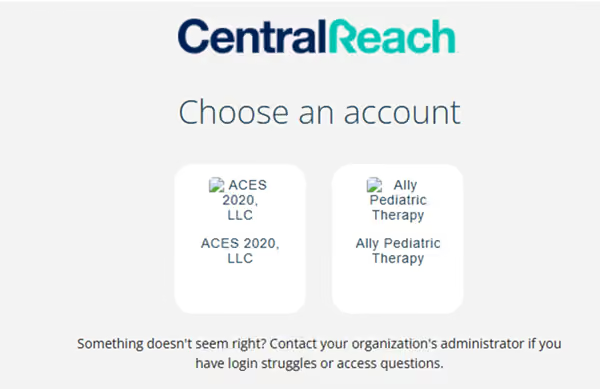
Upon attempt to login to CentralReach Client Portal you should now encounter a dual login option to select which organization you would like to view. Ally Pediatric will be your historical reference for service dates before 4/1/26, whereas ACES 2020 LLC will be your going forward reference for service dates of 4/1/26 and onward.
If you don't see two tiles and should, it's likely there's not a perfect match of name, date of birth, and email between the two accounts. Contact Client Onboarding for support.
Note: Ally CentralReach will have Client Files, however ACES CentralReach will not house your client files. Please reach out to Records@acesaba.com to request clinical documentation. The ACES Client Connect Portal will house ACES policy documentation and profile information.
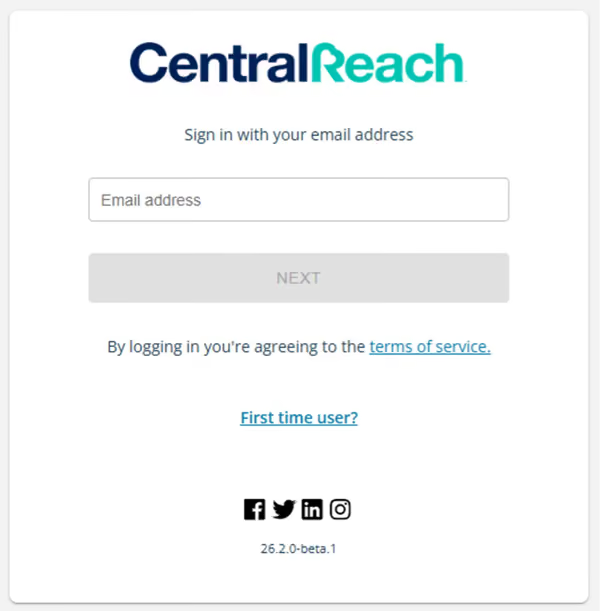
When logging in to the CentralReach Client Portal with SSO for the first time:
- Navigate to login.centralreach.com.
- Click First Time User?
- Select CentralReach.
- Enter your email address in the “Email Address" field and select the reCAPTCHA checkbox, then select Send Link.
- If the user exists within CentralReach, they will receive a "Set up your CentralReach Account" email. An email is not sent if the user does not exist within CentralReach.
- Select Confirm Access & Set Up Password in the email to navigate to the “Set Password” screen.
- When the password meets CentralReach’s requirements and is accepted, the page reloads and displays a hyperlinked “click here to continue” message that redirects users to the login screen.
- Upon returning to the login screen, log in with your email address and password. Users will be directed to the CentralReach Client Portal.
If you have logged into CentralReach previously and you do not remember your password, follow steps below:
- Navigate to login.centralreach.com.
- Enter your email address in the “Email Address" field and click Next
- Click Reset Password
- If that email is found, you will receive a “Set Password” email from CentralReach. Follow steps to reset password and reattempt login when complete.
Email addresses were migrated from Ally CentralReach to ACES CentralReach. Use the same email you had previously provided to Ally.
- Select the way you would like to sign-in, either using your registered email or mobile phone number that can receive SMS text messages.
- If you selected an email domain option, you will be taken to a login page for the email account associated with your domain account. Please login using your domain credentials.
- Important: if you are logged into more than one domain account (e.g. multiple Microsoft accounts), please log out of all accounts and then log back in to the account associated with the email address you provided at registration.
- If you selected “Sign in with Phone Number”, please input your phone number and click “Continue”
- Select either “Send Code” or “Call Me” and you will receive a security code at the phone number you provided
- Input the code and then select “Verify Code”
- If you selected an email domain option, you will be taken to a login page for the email account associated with your domain account. Please login using your domain credentials.
- If login is successful, you will be redirected to your ACES Account Portal
Each code is temporary and helps keep your information secure.
Yes, please call the school if you would like to set up a time to tour our school. (619) 964-6321
Each student follows an individualized daily schedule based on their IEP goals and our functional skills curriculum.
Unfortunately, we do not have open enrollment. We only accept students with referrals from school districts within San Diego County. We do not accept private pay at this time.
A non-public school is a privately operated school, publicly funded by school districts to support students whose needs cannot currently be met within a traditional public school setting. Students are referred through their IEP teams and come to us from school districts throughout San Diego County.
We serve students who have severe communication, learning, social, and behavioral deficits. We primary provide individualized instruction and individualized schedules to accommodate our students’ needs, with limited group instruction. The IEP team will determine if a non-public school placement is appropriate for your child. If the IEP team decides that ACES Academy might be a good fit, the school district will send us a referral. Our program places a high emphasis on functional communication/self-advocacy, independent living skills, vocational skills and functional academics.
If you're having trouble signing in with the email or phone number you used during registration, please contact our client onboarding team.
Phone: (855) 223-7123
Hours of Operation:
- Monday – Friday, 7 AM – 6 PM PST
- Saturday, 7 AM – 3 PM PST
We’ll quickly help you access your portal.
Verification codes expire after a short time and can only be used once.
Click “Send Code” or “Call Me” again and enter the newest code you receive.
This most commonly occurs because you are trying to sign in with an email or mobile phone number that was different from the email or phone number you provided to ACES when you first signed up for or inquired about services.
Please try signing in again with the mobile phone number or email you previously provided to ACES. If you still cannot sign in, please call our Client Onboarding Team at (855)-223-7123 for assistance.
Please make sure you are using the same email address or mobile phone number you provided when you registered.
If you're unsure which one you used, or if your contact information needs to be updated, our onboarding team can help. Please call (855) 223-7123, Monday–Friday, 7am–6pm PST
If your email provider isn’t supported, please sign in using your mobile phone number instead.
Your phone number must be the same one you used during registration and must be able to receive text messages.
- Make sure you entered the correct email address or mobile phone number
- Check your Spam or Junk folder if using email
- Wait a few minutes and click Send Code again
- If using a phone number, confirm it is a mobile number that can receive text messages
Email sign-in is supported for email accounts from Gmail (Google), Microsoft (Outlook, Hotmail, Live), and Apple (iCloud).
If your email is from another provider (such as Yahoo, AOL, or a custom/work email), please sign in using your mobile phone number instead.
When authenticating via Google, Microsoft, or Apple, please ensure you are only logged into one account. If you are logged into multiple Google, Microsoft, or Apple accounts, please log out of all accounts and log back in with the account associated with the email address you provided at registration.
If you're having trouble signing in with the email or phone number you used during registration, please contact our client onboarding team.
Phone: (855) 223-7123
- Monday – Friday, 7 AM – 6 PM PST
- Saturday, 7 AM – 3 PM PST
We’ll quickly help you access your CentralReach Client Portal.
- Log into the parent portal with your email and password.
- Click on the Billing module.

- Click on Unsigned Timesheets.

- Click to adjust the date range of the appointments if needed.
- Review the information about the timesheets on this screen.
- To sign one or many timesheets, check either the individual box(es) to the left of the timesheet(s) or the box at the top to select all in the list.

- Click Sign Timesheets.
- Within the pop-up box, type your full legal name.

- Sign your name.
- Check the attestastion box.
- Click Sign to save.
- A confirmation will appear.

- Login Please visit the following link: https://members.centralreach.com/#login

- Click the “Clinical” book on the left side of the screen.

- lick on your child’s Learning Tree.
- Interact with your child’s ABA treatment plan by selecting any branch within the learning tree on the left hand side.

Perspectivas de expertos para familias
Reciba información confiable, orientación práctica y los recursos más recientes de nuestro equipo clínico.